


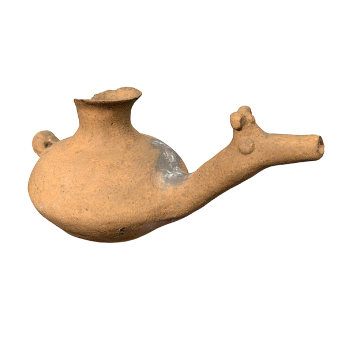
sheep-shaped pottery wine jug
It is a sheep-shaped pottery antique artifact dating from the Late Bronze Age to the Iron Age (c. 1350 BC to 800 BC), found mainly in western Iran (such as the Amrash or Malik cultural areas) and Mesopotamia. This unique animal-shaped pottery is likely to be used for ritual or religious purposes, such as drinking or pouring sacrificial drinks. The liquid is poured from the opening at the top and out through the drain at the mouth of the sheep. In ancient Near Eastern mythology, sheep were often associated with fertility, power, and auspiciousness, and the item may have had significant symbolic or status value in the societies of the time.
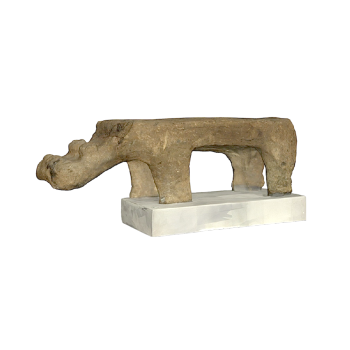
Ancient Egyptian hippo statue
This is an ancient Egyptian hippo statue dating back to the Middle Kingdom period (c. 1961-1878 BC). This statue is the unofficial mascot of the Metropolitan Museum of Art and has a famous nickname "William". It is made of Egyptian glazed pottery (faience), a ceramic material made of quartz powder with a unique blue glaze. The statue was found in a shaft in the burial chamber of a steward named Senbi in the Mayr region of Egypt.
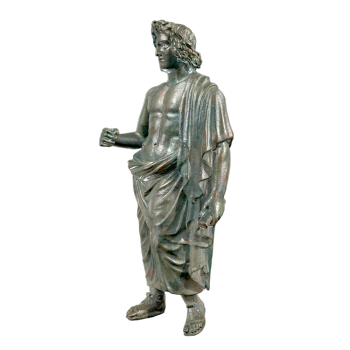
Bronze statue of Asclepius
This is a bronze statue of Asclepius, the ancient Greek god of medicine. He stands steadily, with his center of gravity on one leg and the other leg slightly curved (dual balanced standing posture). His right hand is clenched (he may have originally held a scepter, scroll or spear, which is now missing), his left arm naturally droops, and he may also hold a scroll in his hand. Age: Statues in this style usually date back to the Greco-Roman period from the 1st century BC to the 2nd century AD.
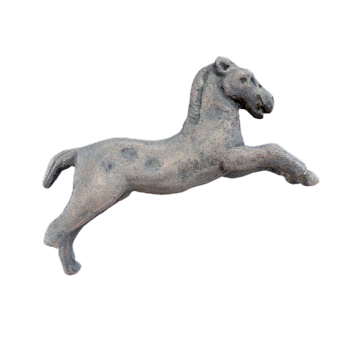
Ancient Roman bronze horse sculpture
This is an ancient Roman bronze horse sculpture in the collection of the Evora Museum. This work can be traced back to the ancient Roman Empire, about the 1st to 3rd centuries AD. The statue was found at a Roman site in Évora, Portugal, and is currently in the collection of the local Évora Museum. The sculpture captures the dynamic moment of the horse's leap, with its front legs off the ground and its hind legs bent and firmly supported on the ground, demonstrating the Roman artist's superb realistic skills and in-depth understanding of animal anatomy.
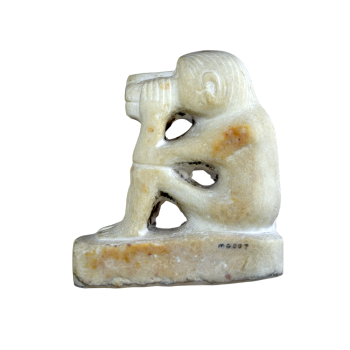
Ancient Egyptian Baboon Stone Carvings
This is a small stone statue of a baboon in a typical ancient Egyptian-style squatting posture. In ancient Egyptian mythology, baboons were one of the incarnations of the god of wisdom, Thoth, and were often represented by this squatting posture with hands on knees and a solemn expression. It is worth noting that there is a clear manual ink book number "M6007" on the side of the base ". This shows that the model is generated by high-definition scanning based on real museum collections or archaeological unearthed cultural relics, and has extremely high scientific research and historical archive value.

Stone Statues of Buddha Sitting on All Sides of the Northern Wei Dynasty
In 1957, the stone statues of Buddha sitting in the four niches of the Northern Wei Dynasty unearthed in Nanniwan, Qin County, were collected by the Nanniwan Stone Carving Museum in Qin County. There are 4 niches and 4 statues of Buddha.

Golden Reclining Buddha
A reclining Buddha looted from a Burmese temple by the British Duke of Cornwall's Light Infantry. It is not clear from which temple the statue was taken. This Buddha statue is displayed in a British museum and is remarkable for its huge size and golden color.

Horse Head Marble Carving
A sculpture of a tomb monument or shrine discovered in Taranto, Italy, now located at the British Museum in London, was made around 350-300 BC.

Shang Dynasty Bronze Beast Faced Pattern Square Cauldron
Fangding "means a square cooking utensil with two ears and four feet. During the Shang and Zhou dynasties, it was popular and commonly used as sacrificial vessels, such as the excavated animal face milk nail patterned square cauldron, Simuwu square cauldron, and Hedang square cauldron.

Knights and Horses
The stone carving was made in Cyprus around 1250-800 BC.

Tiger Phoenix Frame Hanging Drum
Cultural relics of Hubei Provincial Museum. Tiger Phoenix Hanging Drum, also known as Tiger Phoenix Hanging Drum or Tiger Bird Hanging Drum. Excavated from Tomb No. 2 of the Warring States Chu Dynasty in Jiuliandun, Hubei, it is a typical representative artifact of Chu musical instruments. This is one of the largest tiger shaped phoenix frame drums excavated from a Chu tomb in China. Its height is about 1 meter, with symmetrically arranged double phoenixes and double tigers as the drum frame. The base consists of two crouching tigers with their backs facing each other, with a phoenix standing on each tiger's back. The overall shape of the work is unique and elegant, with exquisite design, reflecting the designer's brilliant imagination and superb artistic expression, and possessing strong Chu cultural characteristics.
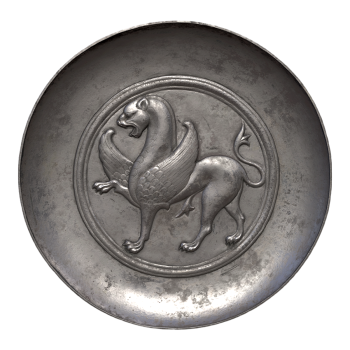
The Plate with Winged Griffon
The 'Plate with Winged Griffin' is a cultural relic located at the Crancliff Art Museum, made of silver and measuring 4 x 32 centimeters (1 9/16 x 12 5/8 inches) in diameter. This work was made during the Hephtalite period (6th to 7th centuries) in the Soghdia region, around 500-600 AD. This work depicts a winged griffin, a mythical creature often depicted as a mixture of lion and eagle, symbolizing strength and nobility.

astronomical observation instrument
An observational astronomical instrument of the first half of the 19th century used to determine the height of a celestial body above the horizon. It consists of a frame limited by two radii and a graduated arc, an observation telescope and a mirror system. The 1/5 arc is the fifth part of the circle, hence the name, similar to the quadrants, 1/6, and 1/8 (based on the fourth, sixth, and eighth parts of the circle, respectively). It is currently housed in the Jagiellon University Museum in Munich, Germany.

The British Rose Theatre
As Shakespeare's budding stage, the Rose Theatre in London carries the deepest theatrical soul of Queen Elizabeth I. The English Heritage Lottery's "Uncover the Rose" (The Rose Revealed Project) restoration project will cost huge sums of money to make the Rose Theater shine again. Imagine watching a famous Shakespeare play in an archaeological theater and feeling the echoes of history. According to the official records of the Rose Theater, when Shakespeare first came to London, he worked in the Rose Theater, worked as an actor, wrote plays and launched plays.

Monument Rune Stone

medieval steel plate armor

Yuan Dynasty Seal
The jade seal, which refers specifically to the emperor's jade seal, is a symbol of supreme power. The ancient seal, the general term, to gold or jade. It is said to begin with Qin Shihuang. The seal came from Zhou Dynasty, and it was not until the Qin Dynasty that there was a seal and a seal. The seal used by the emperor was called the seal, while the seal used by his subjects could only be called the seal.

A red-black glazed clay pot with a handle, circa 6th century BC

Popular Models
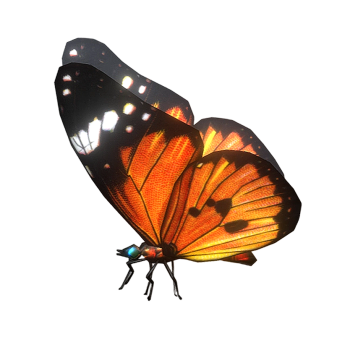
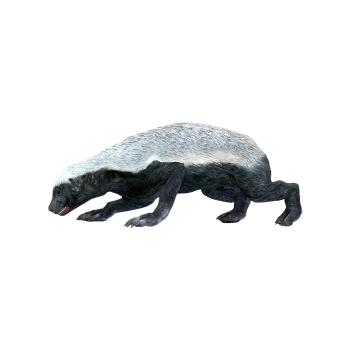
Honey Badger (3D animated model)
192 View
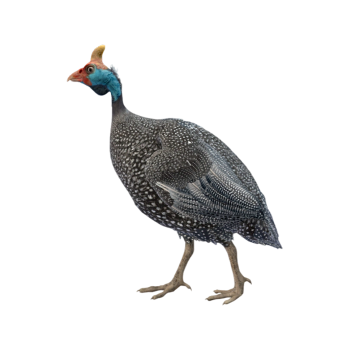
Guinea fowl (3D animated model)
163 View
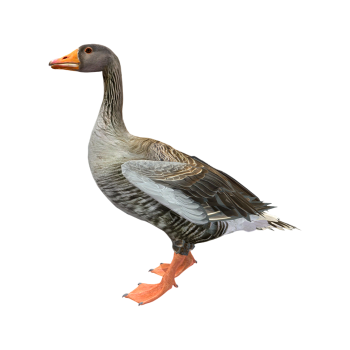
Wild Goose (3D animated model)
185 View

Red Fox (3D animated model)
153 View
Random Model

Mount Yuyayako
933 View

Arabic Style Chandelier
810 View

Grass Sea Dragon 3D Model Animation
832 View


Red Lady Tote
860 View


The engine of Airbus A320
1115 View